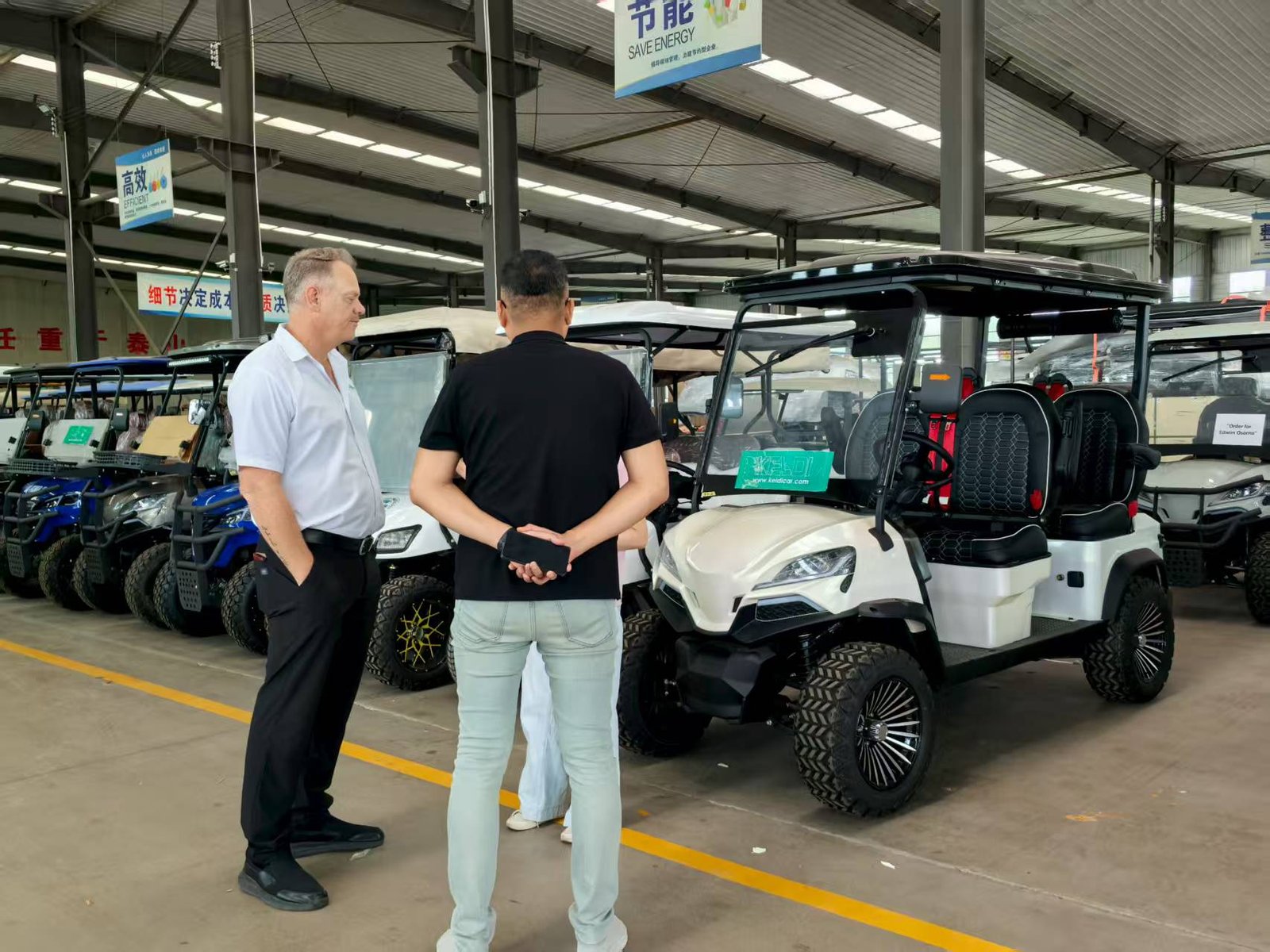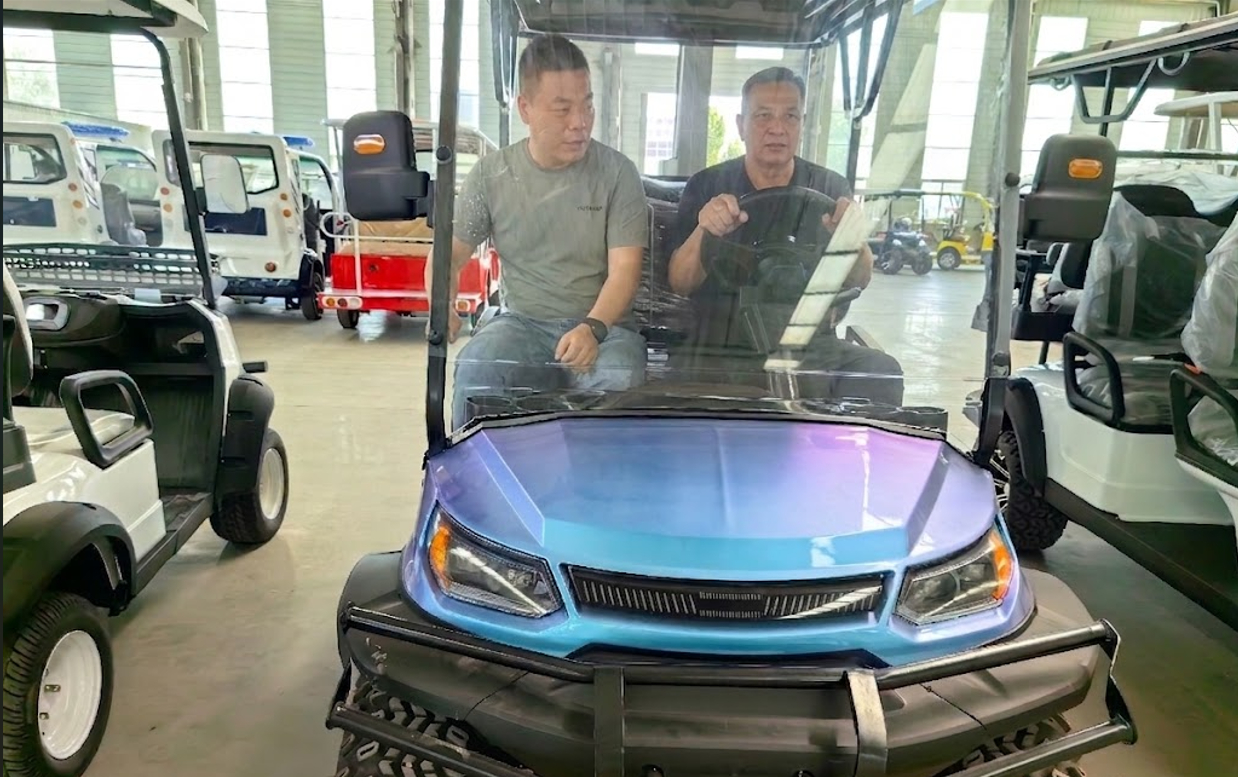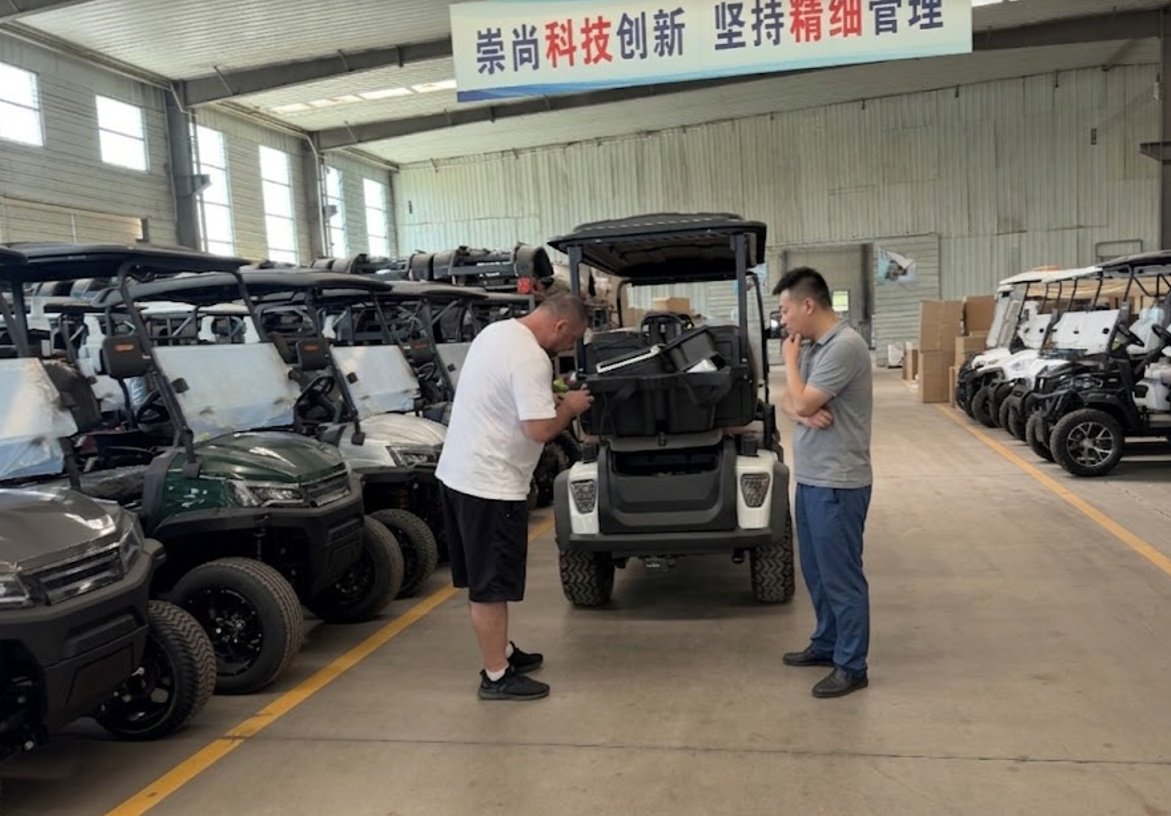
Target Audience: High-volume electric vehicle distributors, commercial fleet buyers, and B2B procurement managers calculating overseas freight budgets.
Core Challenge: Standard global ocean freight for a single shipping container typically fluctuates between $4,000 and $6,000 depending on seasonal demand and peak periods. When shipping fully assembled golf carts, you waste up to 60% of the container's vertical space on empty air, causing the per-unit shipping cost to become financially unsustainable.
Keldi Solution: A highly optimized 3D SKD (Semi-Knocked Down) manufacturing and packaging protocol combined with
heavy-duty stackable steel transport frames.
Result / ROI: Maximizes container loading density to fit up to 24 units in a single 40HQ container, dropping per-unit freight costs to a fraction of traditional methods while ensuring zero-damage arrival.
In international trade, profit margins are won or lost inside the ocean container. With global container freight rates consistently balancing between $4,000 and $6,000, an importer cannot afford to pay for wasted volume.
Let's look at the raw financial contrast of shipping a fleet of standard 2-seater or 2+2 golf carts:
The Traditional Fully-Assembled Method: Due to the height of fixed roof canopies and windshields, a standard supplier can only fit around 8 to 10 fully assembled carts into a 40HQ container. At a $5,000 container rate, your per-unit freight penalty is $500 to $625.
The Keldi 3D SKD Method: By compressing the vertical footprint and utilizing multi-tiered steel frames, we increase that capacity up to 24 units per 40HQ. At that exact same $5,000 container rate, your per-unit freight drops to just $208.
By switching to an engineered loading strategy, you instantly save up to $400 per vehicle before they even reach your showroom floor.
Many importers have suffered the nightmare of opening a container door only to find collapsed wooden crates, scratched paint, bent steering columns, and cracked plastic body panels caused by rough sea transit.
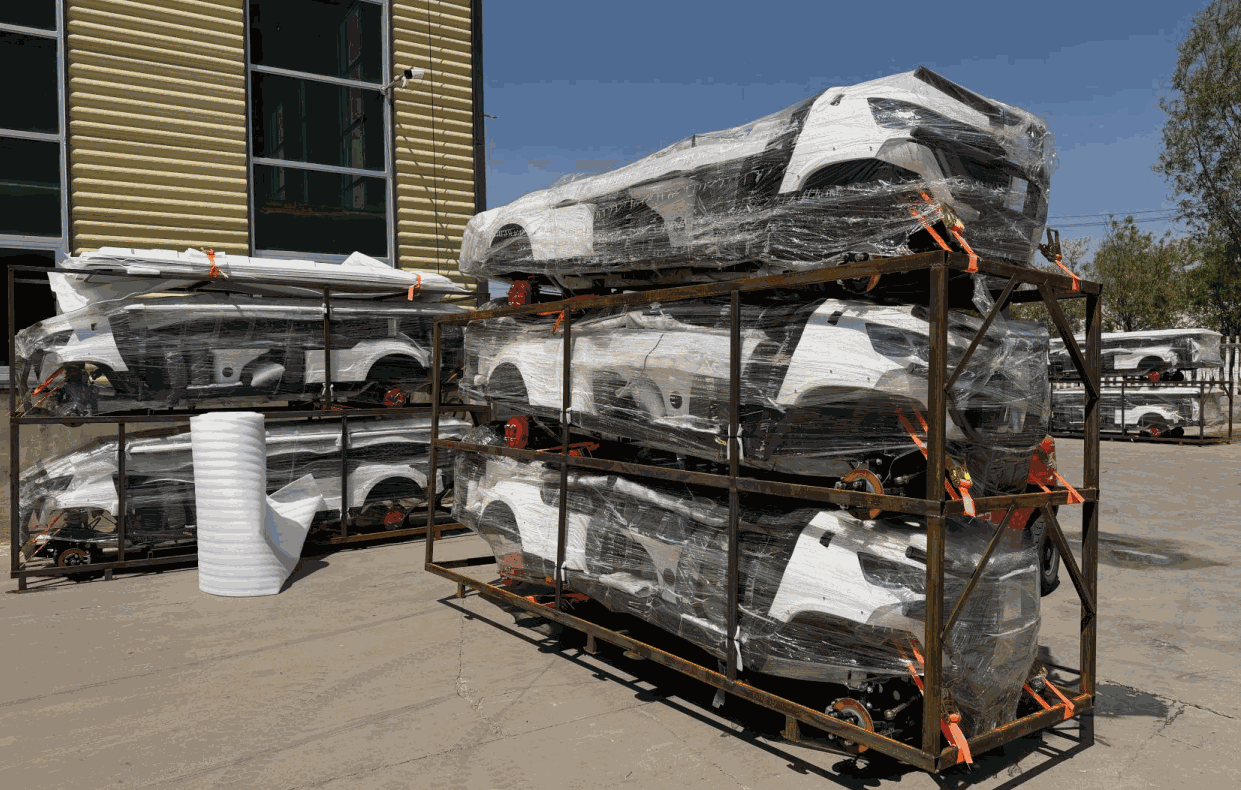
At Keldi, we completely eliminated wood from our logistics pipeline. Every vehicle chassis is anchored directly onto a custom-welded, rigid industrial steel transport frame.
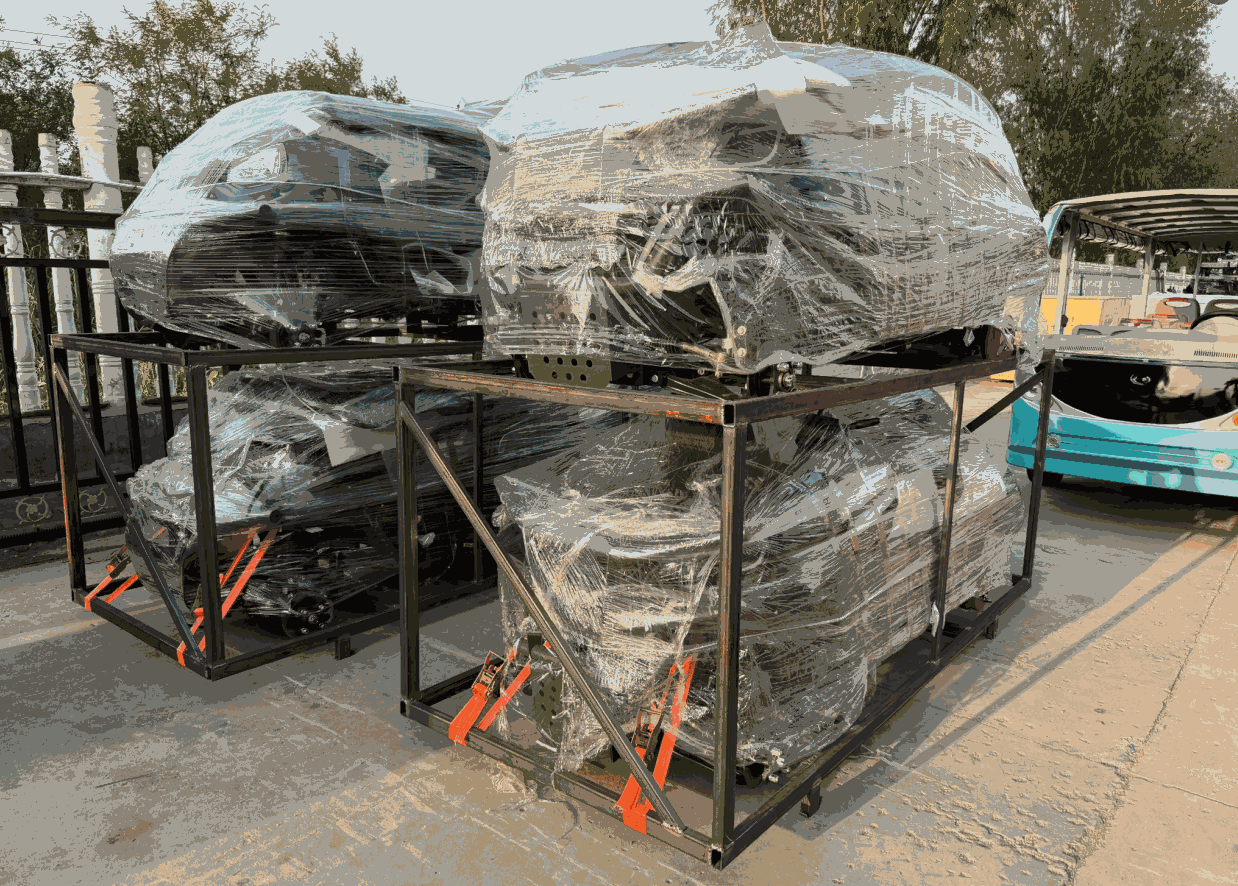
Our packaging engineers secure each vehicle immovably to the steel matrix using heavy-duty ratchet tie-down straps and custom lock points. Because the rigid steel skeleton absorbs 100% of the external structural pressure, multiple tiers can be safely stacked on top of one another. The vehicles themselves experience zero weight, zero compression, and zero metal-on-metal friction during thousands of miles of ocean travel.
Maximizing container density is useless if it takes your local team twelve hours of dangerous manual labor to extract the vehicles at your destination warehouse.
Our 3D steel frames are built with integrated forklift pockets integrated into the base architecture. When the container arrives at your facility, your team does not need specialized vehicle lifts or hazardous ramps.

As shown in our factory loading process above, a standard warehouse forklift can easily slide its tines into the frame base, lifting and rolling the multi-tiered units out of the container doors seamlessly. This turn-key unloading method drastically reduces your local labor costs, protects your warehouse staff from injury, and prevents accidental scratches during unboxing.
The single biggest misconception among B2B buyers is that SKD (Semi-Knocked Down) shipping requires an advanced mechanical workshop to rebuild the vehicles. This is false.
Keldi’s SKD protocol is meticulously designed around a strict rule: Never touch the engineering core.
What Remains 100% Factory-Assembled: The entire rolling chassis, the heavy-duty transaxle, the suspension geometry, the 48V AC motor, the tier-1 controller, and the entire primary electrical wiring harness are completely assembled, synchronized, and quality-tested at our factory before packing.
What is Dismantled for Freight Compression: We only decouple non-mechanical superstructure components—specifically the roof canopy, the vertical support struts, the windshield, and the rear seats (depending on the model).
The Local Reassembly Process:
Because the entire powertrain and electrical system arrive fully intact, reassembly is a straightforward, purely bolt-on procedure. There is absolutely no wiring, no splicing, and no technical calibration required.
To guarantee absolute success, Keldi provides comprehensive, step-by-step video tutorials and direct engineering guidance for your local technical team. Two standard mechanical technicians can easily unframe, bolt together, and drive a compressed SKD unit off the floor in less than 40 minutes.
To calculate your exact shipping capabilities and project your next fleet budget, use our verified factory packing dimensions and loading limits:
| Vehicle Model Class | Seating Capacity | Packing Dimensions (mm) | Packed Weight (KG) | 20GP Container Capacity | 40HQ Container Capacity |
| Model Series A |
2 Seats / 2+2 Seats |
2450 * 1300 * 1300 | 550 – 570 KG | 8 Pcs | 24 Pcs |
| Model Series A |
4 Seats / 4+2 Seats |
3200 * 1300 * 1300 | 650 – 670 KG | 4 Pcs | 18 Pcs |
|
Model Series A |
6 Seats |
3950 * 1300 * 1300 | 750 KG | 4 Pcs | 14 Pcs |
| Model Series A |
8 Seats / 8+2 Seats |
4700 * 1300 * 1300 | 850 – 870 KG | 4 Pcs | 10 Pcs |
| Model Series B/C/E/F |
2 Seats / 2+2 Seats |
2580 * 1350 * 1350 | 580 – 600 KG | 8 Pcs | 22 Pcs |
| Model Series B/C/E/F |
4 Seats / 4+2 Seats |
3340 * 1350 * 1350 | 680 – 710 KG | 4 Pcs | 18 Pcs |
| Model Series B/C/E/F |
6 Seats / 6+2 Seats |
4100 * 1350 * 1350 | 780 – 800 KG | 4 Pcs | 8 Pcs |
Q: How do ocean freight rate fluctuations affect my Landed Cost when buying from Keldi?
A: When ocean freight rates rise into the $4,000–$6,000 bracket, traditional suppliers shipping fully assembled units see their margins completely destroyed because they are paying to ship empty air. Because Keldi's SKD frames maximize density (packing up to 24 units), the freight cost is divided among a much larger volume of vehicles, neutralizing the impact of global shipping spikes.
Q: Do I need specialized diagnostic tools to complete the SKD assembly at my warehouse?
A: No. Because the entire electrical network, battery configuration, and motor drive train are never disconnected or altered during our SKD packaging, you only need standard mechanical hand tools (sockets and wrenches) to bolt the structural roof supports and accessories back into place.
Q: Can a standard forklift handle the weight of stacked steel transport frames?
A: Yes. The rigid base of each frame is specifically engineered with reinforced dual forklift entry points. A standard warehouse forklift can easily lift, stack, and transport the units out of the container safely.
Every inch of empty air inside a ocean container is a direct loss to your dealership's bottom line. Do not let inefficient logistics engineering compromise your commercial importing venture.
Partner with a verified source manufacturer that builds precision transit solutions with the exact same level of engineering rigor applied to our electric vehicles. Contact Keldi’s international logistics division today to request a custom loading optimization blueprint tailored to your specific fleet model requirements.
--------------------------------------------------
KELDI Golf Cart & Sightseeing Buggy | Source Manufacturer
—— Delivering High-Profit, Ultra-Stable Electric Transport Solutions Globally
Skip the middleman markups and unreliable builds. Backed by massive source-factory manufacturing, Keldi provides comprehensive fleet solutions—from heavy-duty anti-corrosion engineering and rapid delivery to lifetime spare parts supply—maximizing your ROI and ensuring seamless operations.
📧 Get Direct Factory Quotes: info@keldigolfcart.com
🌐 Explore Factory Capabilities: www.keldigolfcart.com
📞 WhatsApp / WeChat: +86 15068872777

Built to Mod, Born to Profit.
The ultimate platform for custom golf cart professionals.
Shandong Dezhou
+86 15068872777
info@keldigolfcart.com
Whatsapp:

© KELDI2026.All right reserved.Powered by KELDI
China HQ: Shandong, Dezhou
Whatsapp:+86 +86 15068872777